Shower and Bathtub Plumbing
The expensive part of a shower is never the fixture. It is the valve behind the tile, the pan under the floor, and whether the last person who worked on it thought about either.
Valve replacements, cartridge repairs and leak diagnosis. We tell you honestly when tile has to come off and when it does not.
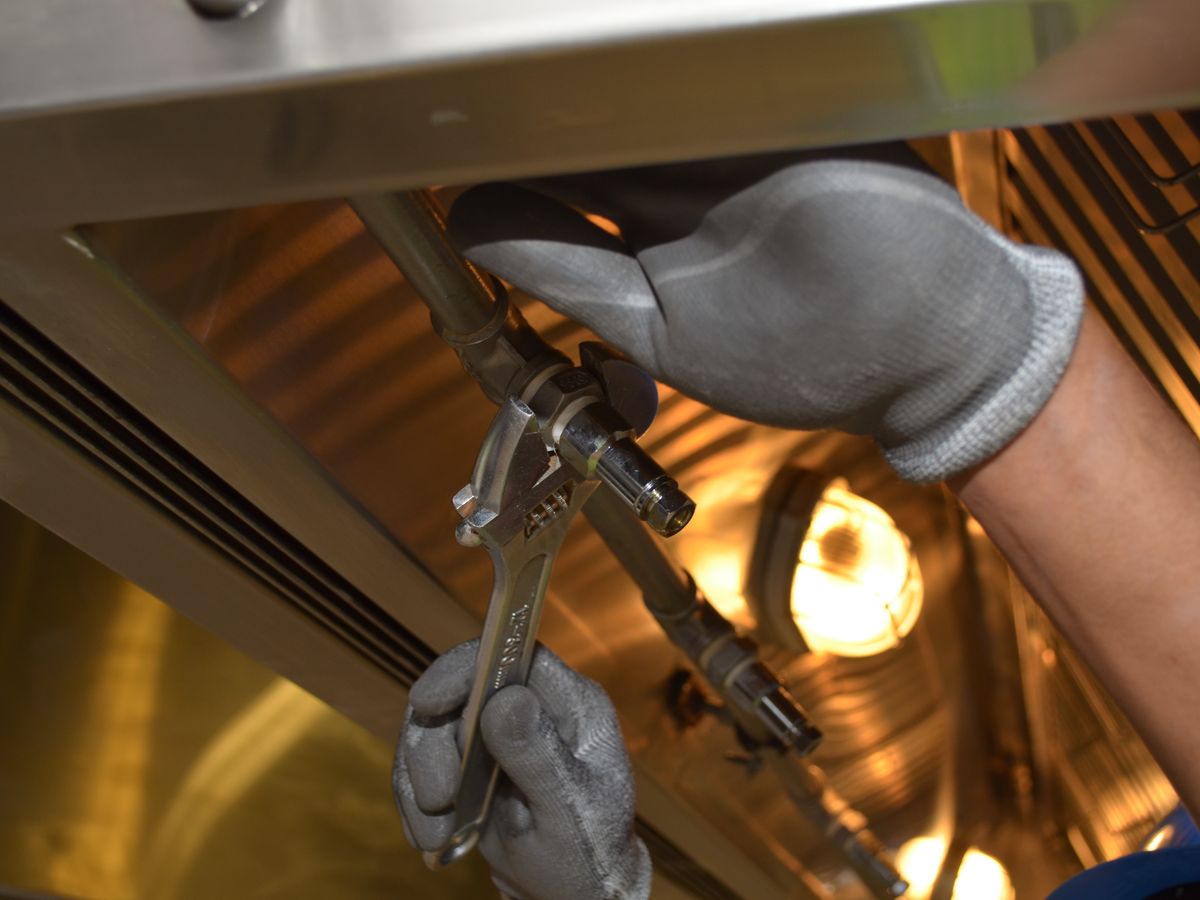
Mixing valves and why they matter
Everything a shower does well or badly comes back to the valve buried in the wall. The trim you see, the handle, the plate, the head, is cosmetic, and it can be changed in an afternoon. The valve body behind it is plumbing, and changing it usually means opening the wall.
Three types are in Oregon houses.
Pressure balancing valves are the common modern standard. They react to a pressure change on either side, a toilet flushing, the washing machine filling, and reduce the other side to match, so the temperature does not swing dangerously. They do not hold a set temperature; they prevent a scald.
Thermostatic valves sense temperature rather than pressure and hold a set point regardless of supply changes. You dial 40 degrees and get 40 degrees. They are more expensive, they need more space in the wall, and on a house with variable incoming water temperature or a tankless heater they are noticeably better. They also allow separate volume control, so the shower can be turned down without the mix changing.
Old two-handle and non-balancing single-handle valves are what remains in a lot of pre-1990 bathrooms. They mix by proportion only, so a toilet flush produces the classic scald. They are not code-compliant for new work and we recommend replacing them whenever the wall is open for any other reason.
When we replace a valve, we fit one with a serviceable cartridge from a brand whose parts will still exist in fifteen years, and we fit an access panel where the layout allows, because the next service should not require a tiler.
Cartridge repairs behind the wall
Most shower faults are cartridge faults, and most of those are repairable without touching the tile.
Dripping when off, worn cartridge seals. A new cartridge, done from the front.
Handle stiff or gritty, scale in the cartridge. Replacement or, on some designs, a clean and regrease.
Temperature range wrong, often just the rotational limit stop, which is adjustable on most pressure-balancing valves and is set wrong on a great many installations. Five minutes, no parts.
Weak flow at the head, the head itself, scaled. Descale or replace, and on hard water east of the Cascades this is routine maintenance rather than a fault.
Diverter will not hold, a tub spout diverter or a three-way diverter cartridge, both replaceable.
Water from the tub spout while the shower runs, a worn diverter, and it wastes a large share of the flow. Frequently tolerated for years.
What does need the wall opened: a valve body that is corroded or leaking, a valve of an obsolete design with no cartridge available, or a change from two-handle to single-handle. In those cases the honest conversation is about access, whether there is a cupboard or a closet on the other side of that wall, which is much cheaper than coming through tile.
A dripping shower is usually a cartridge, done from the front.
Call Now: 1-866-203-6890Scald protection and pressure balance
A shower that goes cold when a toilet flushes is annoying. A shower that goes hot is dangerous, and it is a real injury risk for children and older adults, who both scald at lower temperatures and take longer to react.
Two protections work together. The valve, as described above, prevents the swing. And the water heater setting sets the ceiling on how hot the supply can be.
On the heater, 120 degrees is the usual recommendation for scald safety. There is a competing consideration: below about 130 degrees, storage tanks are more hospitable to legionella bacteria. The standard resolution is to store hot, 130 to 140, and fit a thermostatic mixing valve at the heater outlet to deliver 120 to the house. That gives both the storage temperature and the delivery safety, and it also increases effective hot water capacity, which is a useful side effect on an undersized tank.
We also check, on any shower work, that a shower on an upper floor is not being fed through a long run shared with a laundry or a toilet in a way that guarantees temperature swings. Sometimes the fix is a valve; sometimes it is a supply reroute; sometimes it is simply knowing not to run the washing machine at bath time.
Shower and tub drains
Shower and tub drains block differently from other fixtures because of what goes down them: hair, soap and skin oils, which combine into a mat that catches everything else.
A slow shower is usually the trap or the first few feet of the branch. It clears mechanically, a small cable, or removing the strainer and pulling the mat out, which is unpleasant and effective. We do not recommend caustic drain products in a shower: they sit in the trap, they do a poor job on a hair mat, and on old galvanized or thin-wall waste pipe they cause real damage.
Tub drains have their own mechanism, the overflow and the trip lever or pop-up linkage, and a tub that will not hold water or will not drain properly is often a linkage adjustment rather than a blockage. The linkage also carries the overflow gasket, which is a common source of a leak that appears as a ceiling stain below rather than water in the bathroom.
Where a shower or tub drain blocks repeatedly, the cause is usually further down: a shallow-fall waste line, a poorly vented branch, or debris accumulation in an old cast iron waste stack. A camera inspection answers it rather than clearing the same trap every six months.
Venting deserves a mention. A shower that gurgles, drains slowly with no obstruction, or emits a smell when another fixture runs has a venting problem, not a blockage. Blocked roof vents are common, and in mountain communities they freeze shut in winter.
Store hot, deliver at 120 with a mixing valve. Both problems solved.
Book a Valve RepairPan and liner leaks
This is the failure that does serious, expensive damage, and it is almost always slow.
A tiled shower floor is waterproofed by a pan or liner underneath, traditionally a sheet membrane in a mortar bed, now often a sheet or liquid membrane over a preformed base. The tile and grout are not the waterproofing. They never were. When the membrane fails, or was never installed correctly, water passes through the grout, through the bed, and into the framing and subfloor.
Signs: a musty smell in the bathroom, discoloured or springy flooring outside the shower door, a stain on a ceiling below, loose tiles at the base, efflorescence at the bottom row of grout, and a shower that seems to need more grout repair than makes sense.
The unwelcome truth is that a failed pan cannot be repaired from above. Regrouting, sealing and coatings applied over a failed membrane hide the symptom while the framing keeps getting wet. Anyone offering to fix a leaking shower pan with sealant is selling time, not a repair.
What we do is establish whether the pan is actually the source, a flood test on the plugged drain, held for 24 hours with monitoring below, is definitive, and then set out the real options: a full tear-out and rebuild with a properly detailed membrane and drain, or a conversion to a preformed base with a factory-integrated drain, which is often cheaper and more reliable than rebuilding a traditional mortar bed.
The drain connection itself is a frequent culprit and a happier finding: a clamping drain whose ring has loosened, or a membrane not properly clamped to it, leaks at exactly the point where all the water goes and is sometimes accessible from below.
Diagnosing a leak without demolition
Before anything comes apart, we isolate the source, because the repairs are wildly different in cost.
Run the shower with the drain blocked and watch below. Water then means pan or drain, not supply.
Fill the tub and let it stand, then drain it. A leak on standing means the overflow gasket or the pan; a leak only on draining means the trap or waste connection.
Pressurise with no water running. A leak with everything off is a supply pipe or a valve body, and that is behind the wall.
Wet the walls only, not the floor. Isolates a wall or surround failure from a floor failure.
Moisture meter and thermal imaging to map the wet area, which frequently shows the water is travelling from somewhere other than the obvious point.
We report what the tests show, including when the answer is that tile has to come off. Guessing wrong on a shower leak is how people pay twice.
Tub-to-shower conversions
A common request, particularly for ageing in place, and the plumbing side is more involved than the demolition suggests.
The drain has to move, a tub drain sits at one end, a shower drain sits centrally, which means opening the floor and reworking the trap and waste, and the fall available under the floor decides what is possible. On a slab, this is a significantly bigger job than on a crawl space or basement.
The valve usually gets replaced, because a tub-shower valve has a diverter that a shower does not need, and because it is the sensible moment to fit pressure-balancing or thermostatic protection.
Waterproofing gets done properly from the start, which is the whole point of doing it as a project rather than a swap.
For accessibility, a low-threshold or curbless entry needs the drain and the floor structure planned together, and it is worth deciding early because it constrains everything else. A linear drain at the wall is often the answer, and a bench, a hand shower on a slide bar and blocking in the wall for future grab bars are cheap to include now and expensive to add later.
A failed pan cannot be fixed with sealant. We will flood test it.
Get a Leak DiagnosisServices that often go with this one
- Toilet repair & installation
- Faucet & fixture installation
- Drain cleaning
- Leak detection
- Water heater repair
- Basement water leak diagnosis
Where we cover
Available in all seven regions, 155 Oregon communities.
Showers and tubs, answered
Sometimes. If a cartridge or trim change solves the fault, no tile comes off. If the valve body itself has to be replaced, access is needed, ideally from a cupboard or closet behind the wall, which is much cheaper than cutting tile. We check for that possibility before quoting demolition.
Because the valve is not pressure balancing. Old mixing valves proportion hot and cold, so losing cold pressure raises the temperature. A modern pressure-balancing or thermostatic valve prevents it, and it is a genuine safety issue with children or older adults in the house.
Often it is a hair and soap mat in the trap, which can be pulled out after removing the strainer. If it recurs quickly, gurgles, or affects other fixtures, the cause is further down, a shallow line, a venting problem or accumulation in an old stack, and that is worth a camera inspection.
Not from above. Grout, sealant and coatings over a failed membrane hide the symptom while framing keeps getting wet. The honest options are a rebuild with a properly detailed membrane or a conversion to a preformed base with an integrated drain. We flood test first to be certain the pan is the source.
120 degrees for scald safety, but tanks stored below about 130 are friendlier to legionella. The standard answer is to store at 130 to 140 and fit a thermostatic mixing valve at the heater outlet so the house receives 120, which also stretches effective hot water capacity.
More than it looks, because the drain has to move from the end of a tub to the center of a shower. That means opening the floor and reworking the waste, and the available fall determines what is possible, straightforward over a crawl space, considerably more work on a slab.
Planning a conversion? The drain move decides the cost.
Talk to a PlumberFind out what is behind the tile before anyone opens it
Cartridge repairs from the front, flood testing before demolition, and access from the back of the wall wherever the layout allows. Tile comes off only when the tests say it has to.
Statewide · 24/7 dispatch
Call 1-866-203-6890