Tankless Water Heater Installation in Oregon
Endless hot water is real. So is the gas line upsize, the new venting and the annual descale that nobody mentions in the showroom. Here is the whole picture.
Conversion assessment before any quote, gas capacity, venting route and incoming water temperature.
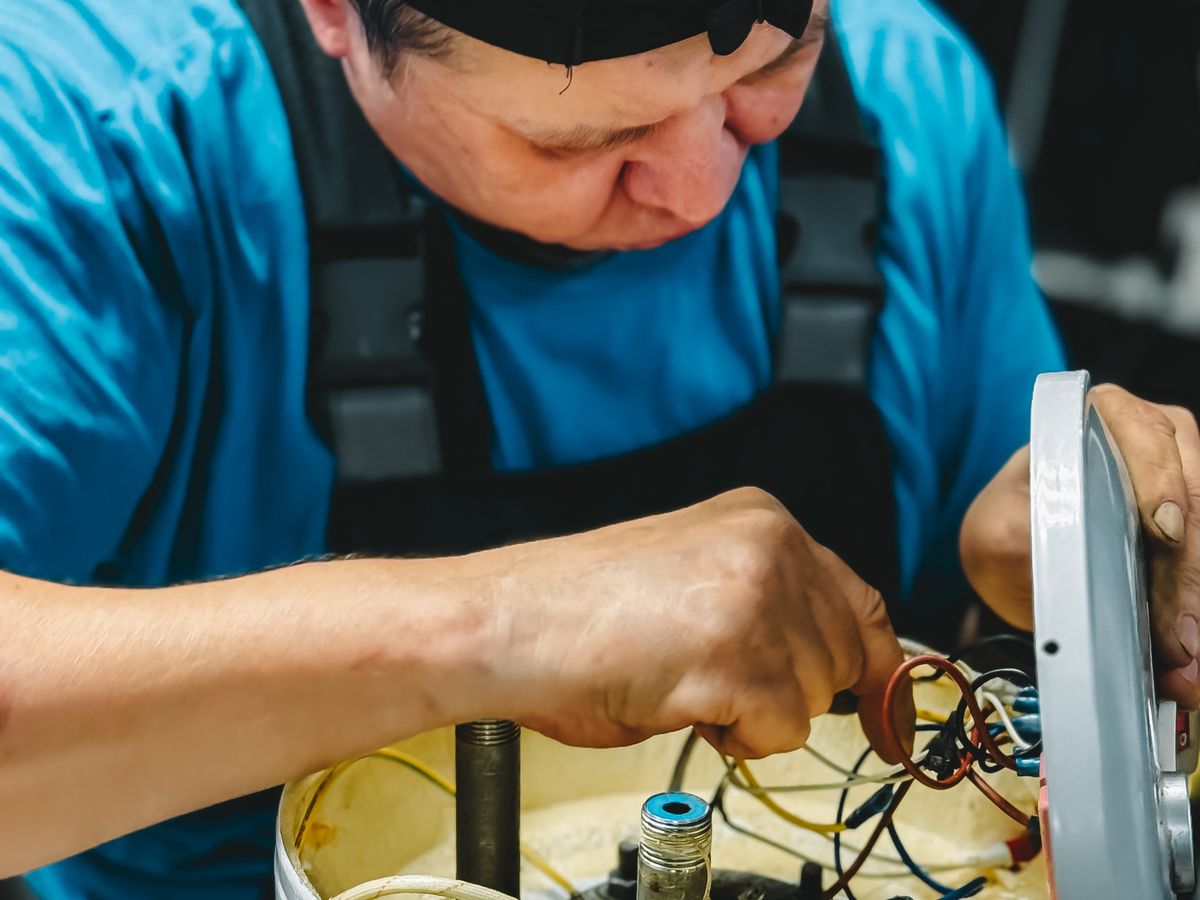
How tankless actually works
A tankless unit stores nothing. When a hot tap opens, a flow sensor detects it, the burner fires, and water is heated as it passes through a heat exchanger. When the tap closes, the burner stops. There is no stored volume losing heat to the room all day, which is where the standby-loss saving comes from.
The important consequence is that a tankless heater is rated by flow, not by volume. Its capability is expressed as a temperature rise at a given flow rate, how many degrees it can add to how many gallons per minute. Every question about whether a particular unit will satisfy a particular house comes back to that one relationship.
The second consequence is that it needs to deliver its entire heat output instantaneously rather than over an hour. That is why a gas tankless typically needs several times the gas input of the tank it replaces, and why the gas supply is the first thing we check.
What you genuinely get
Hot water that does not run out. The real headline. Back-to-back showers, a long soak, laundry and a shower at once, within the unit's flow capacity, it simply keeps going. For a household that has been rationing hot water, this is transformative in a way the efficiency numbers do not convey.
Lower standby losses. No tank sitting at temperature around the clock. Real savings, though usually more modest than the marketing suggests, the water still has to be heated, and the saving is the standing loss rather than the heating energy.
Space. A wall-mounted unit the size of a small suitcase instead of a cylinder occupying a closet floor. In a small house, reclaiming a closet has genuine value.
Life. Commonly fifteen to twenty years against eight to twelve for a tank, and the components are serviceable rather than the whole unit being disposable. That longer life is a real part of the economic case.
No tank to fail. The classic catastrophic water heater failure, a corroded tank letting go and flooding a closet, is not a tankless failure mode.
Replacing an existing tankless is simpler than converting. Say which.
Call Now: 1-866-203-6890What the conversion really involves
This is the part that separates a fair quote from a cheap one. Converting from tank to tankless is rarely a swap.
Gas line capacity. A tank heater might draw 40,000 BTU; a whole-house tankless commonly needs 150,000 to 199,000. Existing half-inch supply is frequently inadequate, and the line has to be assessed from the meter forward with every other appliance accounted for. Sometimes the answer is a larger branch; sometimes it is a meter upgrade with the utility. This is the single most common reason a conversion costs more than expected, and anyone quoting without checking it is guessing.
Venting. Tankless units use their own sealed venting, typically stainless or PVC depending on the unit, and the old atmospheric flue cannot be reused. The vent route has to be planned, and the unit often has to move to a wall where venting is practical.
Condensate. Condensing units produce acidic condensate that needs a drain, and frequently a neutraliser before it enters the drainage system.
Water connections and location. Moving the heater means extending supply and return runs, and adding isolation valves with service ports for descaling, which should be standard on every tankless installation and is sometimes omitted to save fifty dollars, making every future service a much bigger job.
Electrical. Even gas units need power for controls and fan, so a circuit is required.
None of this makes conversion a bad idea. It makes it a project with a real number, and we would rather give you that number than a low one that grows.
Sizing for Oregon water temperatures
Sizing is where tankless installations disappoint when they are done casually, and incoming water temperature is why.
A unit rated to deliver a given flow at a 50-degree rise delivers considerably less at a 70-degree rise. Incoming water in the Willamette Valley in February is cold; in Central and Eastern Oregon and the mountain communities it is colder still, and in some well systems colder again. The same unit that satisfies a household in Medford in September may not satisfy it in Bend in January.
So we size on winter incoming temperature at your address, not on an average, and on your actual simultaneous demand, how many fixtures might realistically run at once, and at what flow. Two showers plus a kitchen tap is a very different requirement from one shower.
Where a single unit cannot cover peak demand, the options are a larger unit, two units in cascade, or accepting a known limitation. We would rather tell you which fixtures will conflict than have you discover it in the first cold week.
Gas capacity is the usual constraint. We check it before quoting.
Get a Tankless QuoteGas supply, venting and condensate
We assess the gas system as a whole: meter capacity, main line size, run length, and every other appliance that might draw at the same time. Pipe sizing on a long run matters as much as diameter at the meter, because pressure drop over distance is what starves an appliance.
Where capacity is short, the options are upsizing the branch, upsizing the main run, or requesting a meter change from the utility, which we coordinate. On a propane system east of the Cascades, tank size and regulator capacity are the equivalent questions.
Venting is planned before the unit position is fixed, because the two decide each other. Direct-vent units draw combustion air from outside, which is generally the better arrangement and avoids the combustion air problems that plague old closet installations.
Condensate from a condensing unit is acidic. It gets a proper drain and, where the drainage material or the jurisdiction requires it, a neutralising cartridge. Left to discharge onto a garage floor, it eventually etches the concrete.
Electric tankless, and why we rarely fit it
Whole-house electric tankless exists and we install it occasionally, but honestly: in Oregon it is usually the wrong answer.
The electrical demand is severe, a whole-house unit can need multiple double-pole circuits and a service capacity many older houses do not have, so the panel upgrade often costs more than the heater. And the colder the incoming water, the higher the demand, which is exactly the wrong direction for this state.
Where electric tankless does make sense is point-of-use: a single remote fixture, a garage sink, a guest bathroom far from the heater, or an outbuilding. In those roles it is genuinely useful and inexpensive.
For whole-house electric, a heat pump tank is nearly always the better choice, lower running cost, no service upgrade, and no cold-water penalty of the same severity.
Descaling and maintenance
A tankless heat exchanger scales with mineral deposits, and scale reduces output and eventually damages the unit. Annual descaling, circulating a descaling solution through the exchanger via the service valves, is standard maintenance, not an upsell, and skipping it is the most common cause of a tankless unit disappointing at year six.
How often depends on water hardness, which varies widely across Oregon. Soft municipal water in Portland may permit an eighteen-month or two-year interval. Hard well water in parts of Central and Eastern Oregon may want it every year without fail, and a softener is worth considering alongside.
The rest of the service is quick: clean the inlet filter, check the venting and condensate drain, verify combustion, and check error history in the controller. We offer it as a scheduled annual visit and we fit isolation valves with service ports on every installation so it stays a simple job.
Cold incoming water east of the Cascades affects sizing. It matters.
Book a DescaleServices that often go with this one
- Water heater installation
- Water heater repair
- Gas line services
- Water softener installation
- Water filtration & treatment
- Water pressure regulator
Where we cover
Available in all seven regions, 155 Oregon communities.
Tankless water heaters, answered
Within the flow capacity of the unit, yes. Exceed that, too many fixtures at once for the size fitted, and the temperature drops rather than the water running out. That is why sizing against your actual simultaneous demand matters so much.
Because it is usually not a swap. Gas capacity often has to be increased, new sealed venting is required, condensate needs a drain, and the unit frequently moves position. The unit price is a minority of the total, and a quote that ignores those items will grow.
Standby losses, mainly, commonly a modest but real reduction rather than a dramatic one. The stronger arguments are unlimited hot water, reclaimed space and a unit that lasts fifteen to twenty years instead of ten.
A short one while the burner fires, plus the usual travel time through the pipe, often called the cold water sandwich when a tap is opened, closed and reopened. A recirculation option or a small buffer tank addresses it where it bothers you.
Yes, but capacity falls as incoming water gets colder, which is precisely why we size on winter incoming temperature at your address rather than an average. East of the Cascades that difference is significant.
Annually as a default, and possibly less often on soft municipal water. On hard well water it should not be skipped. We fit service valves on every installation so the job stays simple and inexpensive.
Annual descaling is maintenance, not an upsell.
Ask if It Suits Your HouseFind out whether your house can actually feed one
The assessment covers gas capacity, venting route, condensate and winter incoming temperature. If a conversion does not stack up at your address, we will tell you that before you spend anything.
Available statewide.
Call 1-866-203-6890